Mountain of Seven Colors: The History and Significance
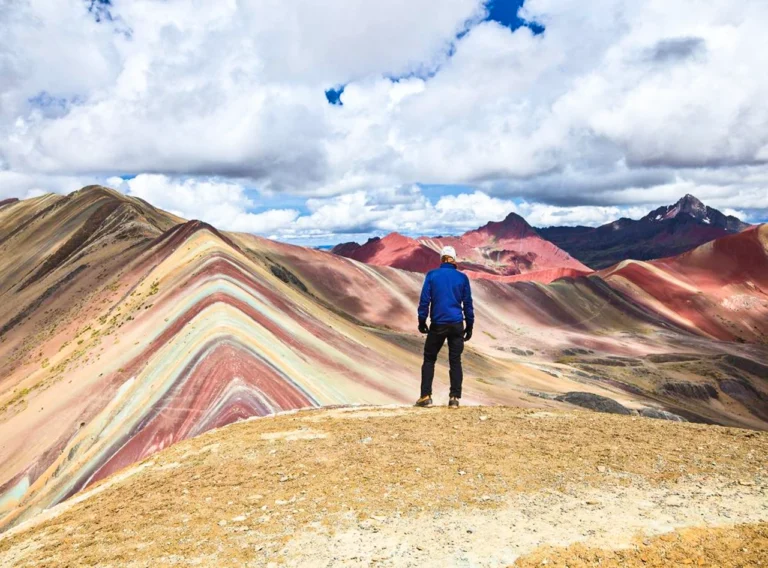
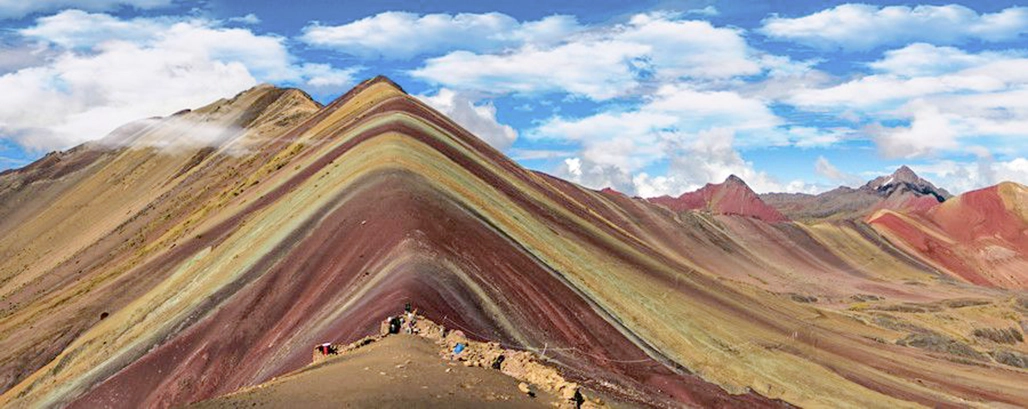
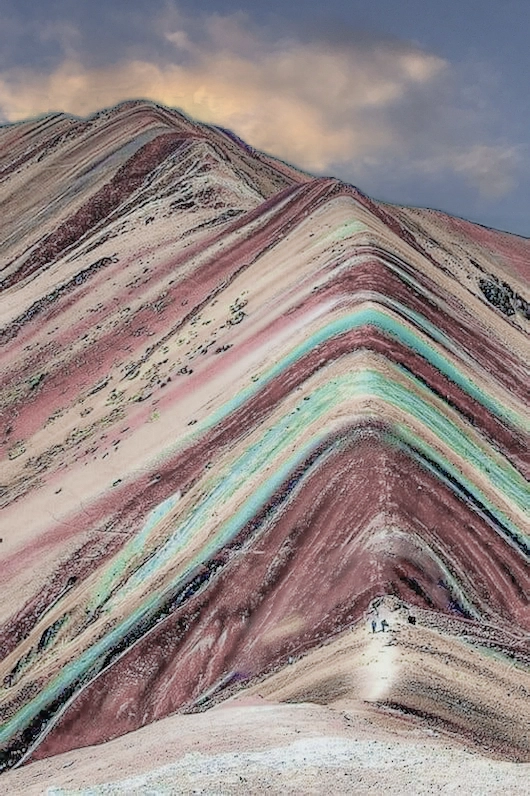
Mountain of Seven Colors, also known as Vinicunca or Winikunka, is one of the most breathtaking tourist destinations in Peru and the world. Located in the district of Pitumarca, province of Canchis, in the Cusco region, this natural wonder stands at more than 5,200 meters above sea level and attracts thousands of domestic and international visitors each year. Its stunning colors, the result of mineral accumulation over millions of years, make this place a unique experience for those who wish to discover the beauty of the Peruvian Andes.
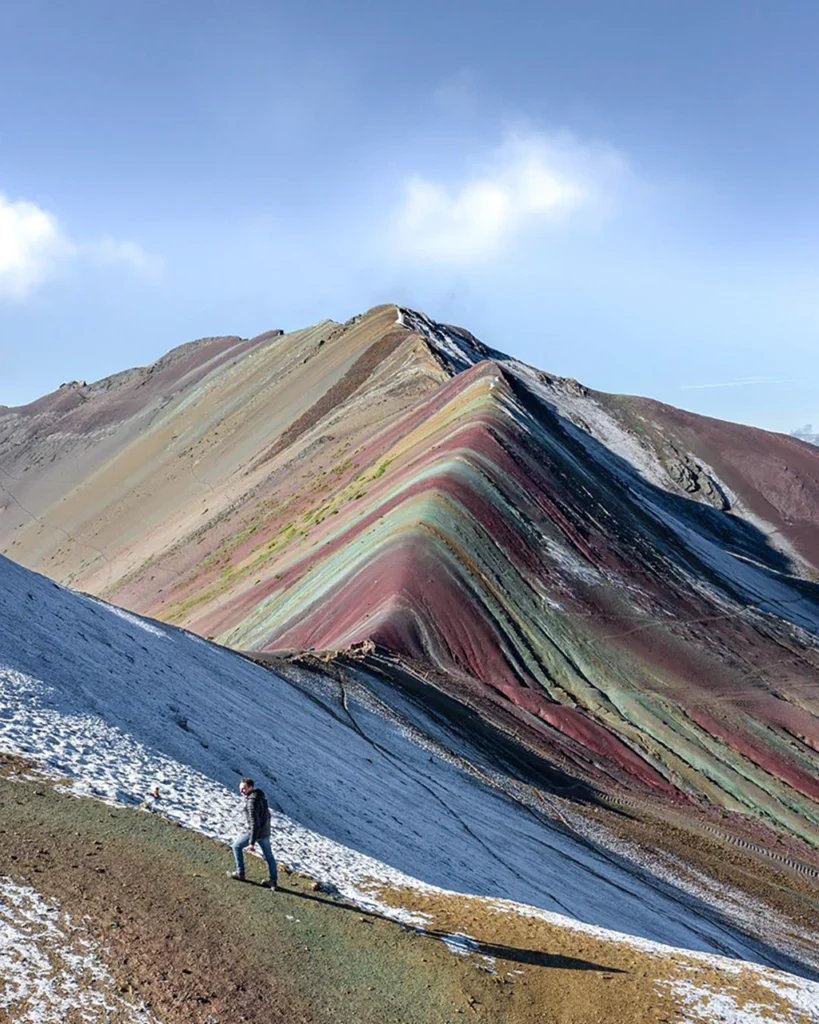
Where is the Mountain of Seven Colors located?
The Mountain of Seven Colors is located in the district of Pitumarca, province of Canchis, Cusco region, at an altitude of approximately 5,200 meters above sea level. It is situated about 120 kilometers from the city of Cusco, a journey that takes approximately three hours by car.
It is also known as Vinicunca or Winikunka, a Quechua word meaning “hill with colorful stones shaped like a neck.” It is currently considered one of Peru’s main tourist attractions and has become a true global tourism sensation.
History and Significance of Vinicunca
Although it is now internationally famous, the mountain has been known since ancient times by local communities as Mount Winikunka. Its recent popularity is due to the retreat of the snow cover that once obscured much of its colors, allowing this geological wonder to become visible to the world.
Furthermore, for many Andean communities, Rainbow Mountain is considered a sacred mountain or “apu”—that is, a protective spiritual entity linked to the Andean worldview.
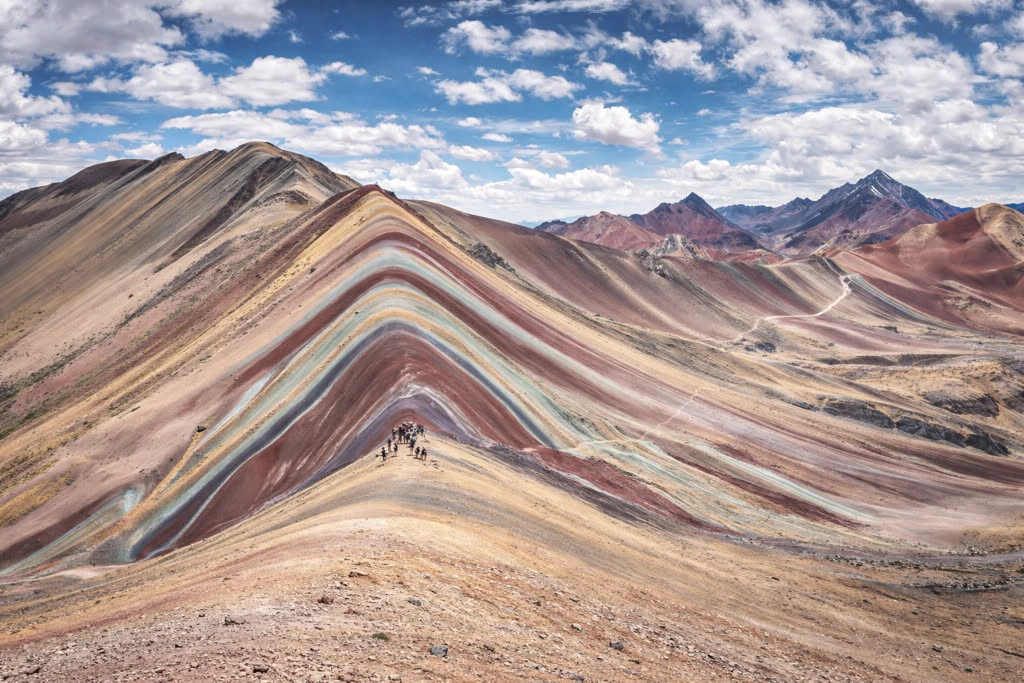
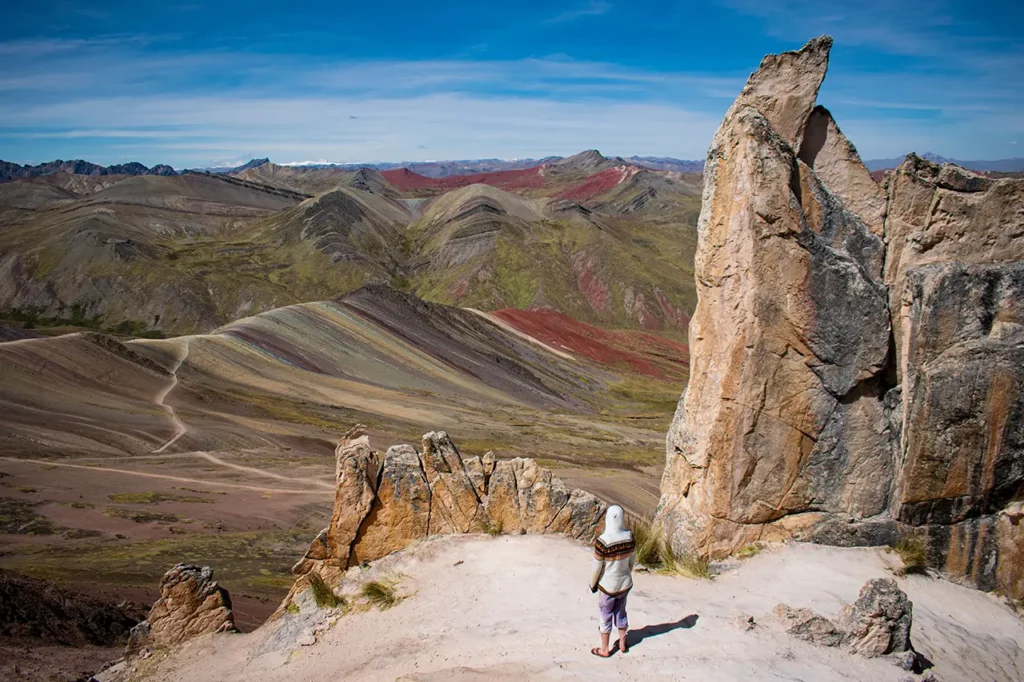
The Seven Colors of Rainbow Mountain
The stunning colors of Vinicunca are the result of various minerals accumulated in its geological layers.
- Pink or fuchsia: This color is caused by a mixture of red clay, fangolites, and sand.
- Whitish: This color comes from the presence of sandstone, quartz sand, and limestone.
- Purple or lavender: This color results from the combination of marl, clays, and calcium carbonate with silicates.
- Red: This is due to the presence of argillites and iron-rich clays.
- Green: This is produced by clays containing ferromagnesian minerals and copper oxide.
- Yellow, mustard, or gold: This comes from limonites, calcareous sandstones, and sulfide minerals.
Connection to Mount Ausangate
The Mountain of Seven Colors is part of the Andes mountain range and is located near Mount Ausangate, one of the most important mountains in Cusco, with an approximate elevation of 6,372 meters above sea level. This snow-capped peak is considered one of the region’s most sacred apus and holds great cultural and spiritual significance for Andean communities.
Climate of the Mountain of Seven Colors
The climate on Vinicunca Mountain is cold year-round due to its high altitude. The average annual temperature ranges from 7 °C to 12 °C.
Rainy Season
The rainy season occurs mainly between December and March. During these months, it is necessary to take extra precautions due to rainfall, wind, and slippery trails.
Altitude Sickness
One of the main challenges for visitors is soroche, or altitude sickness; therefore, it is recommended to acclimate in the city of Cusco before embarking on the hike.
Flora and Fauna of Vinicunca
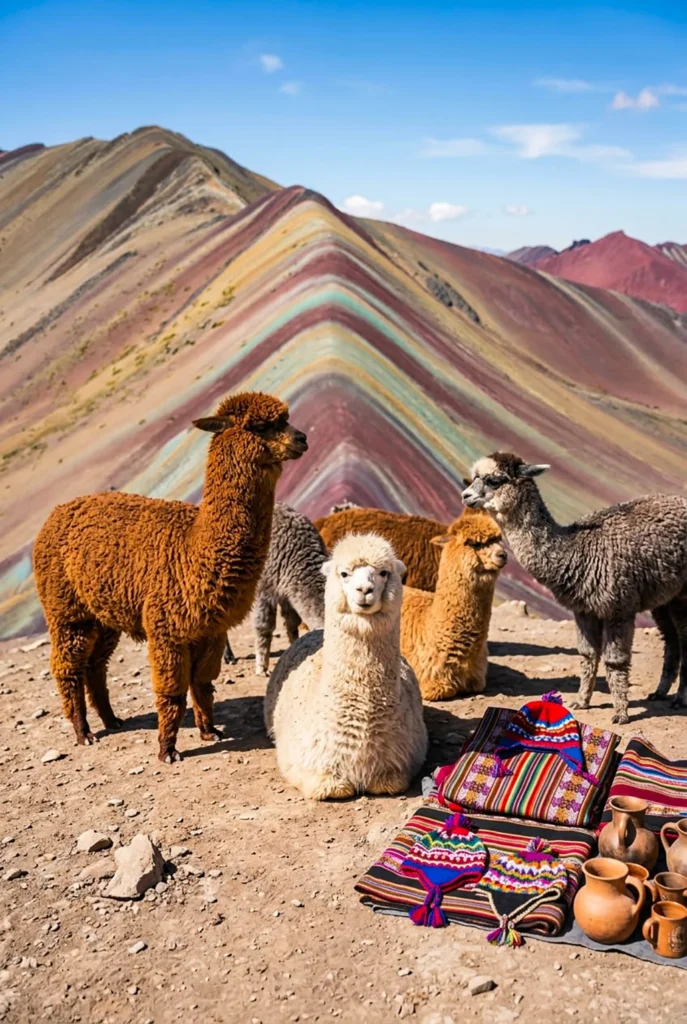
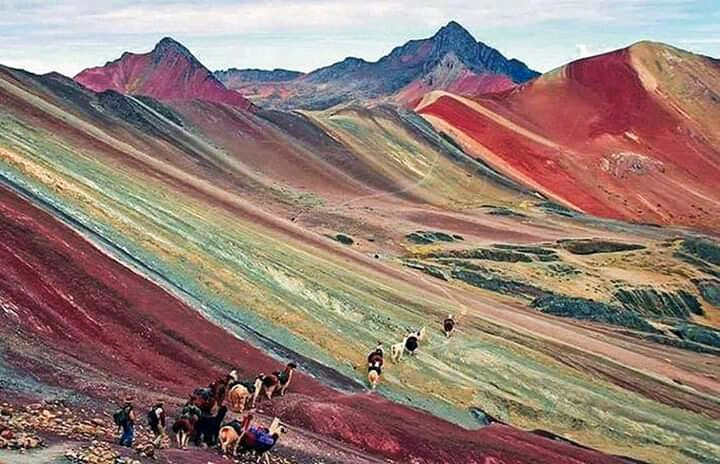
Despite the extreme weather conditions, the mountain is home to a variety of plant and animal species characteristic of the Andes.
Flora
- Ichu.
- Andean lichens.
Fauna
- Alpacas.
- Llamas.
How to Get to the Mountain of Seven Colors?
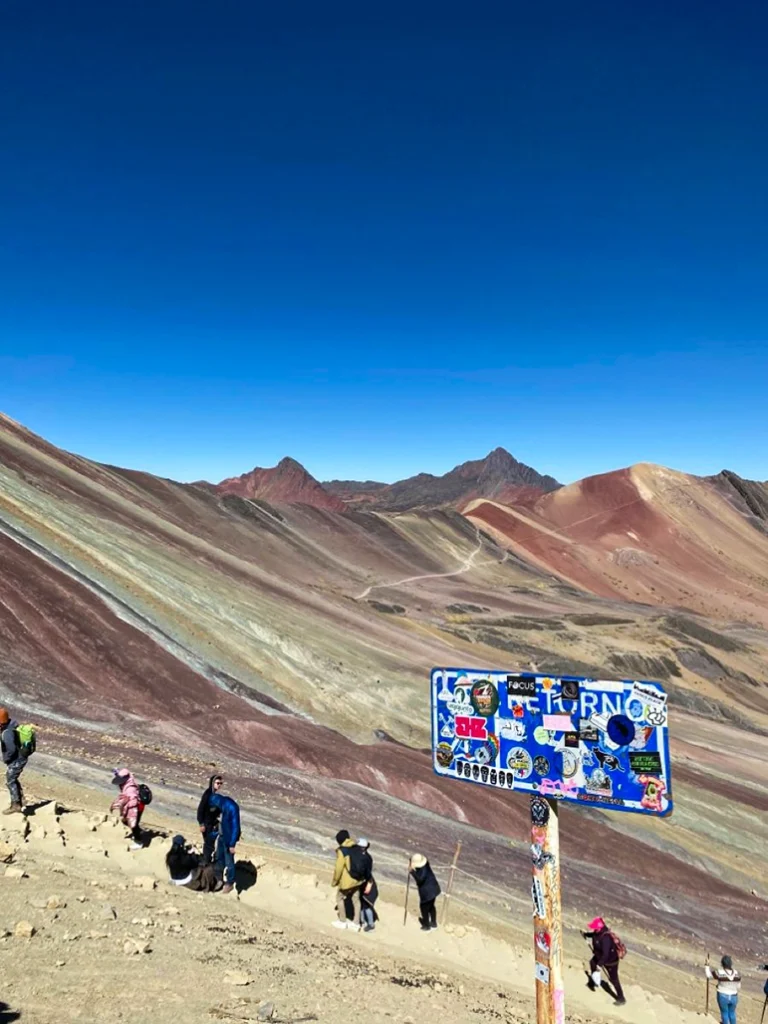
To reach the Mountain of Seven Colors, you must depart from the city of Cusco. The drive takes approximately two hours along the Longitudinal de la Sierra Sur highway until you reach Pitumarca.
From there, continue along a gravel road to the community of Pampachiri. From this point, a hike of approximately five kilometers begins along mountain trails. There is also the option to cover part of the route on horseback.
Currently, several tour agencies offer organized excursions that include transportation, meals, and a guide.
Recommendations for Visiting Vinicunca
- Rain poncho.
- Waterproof jacket.
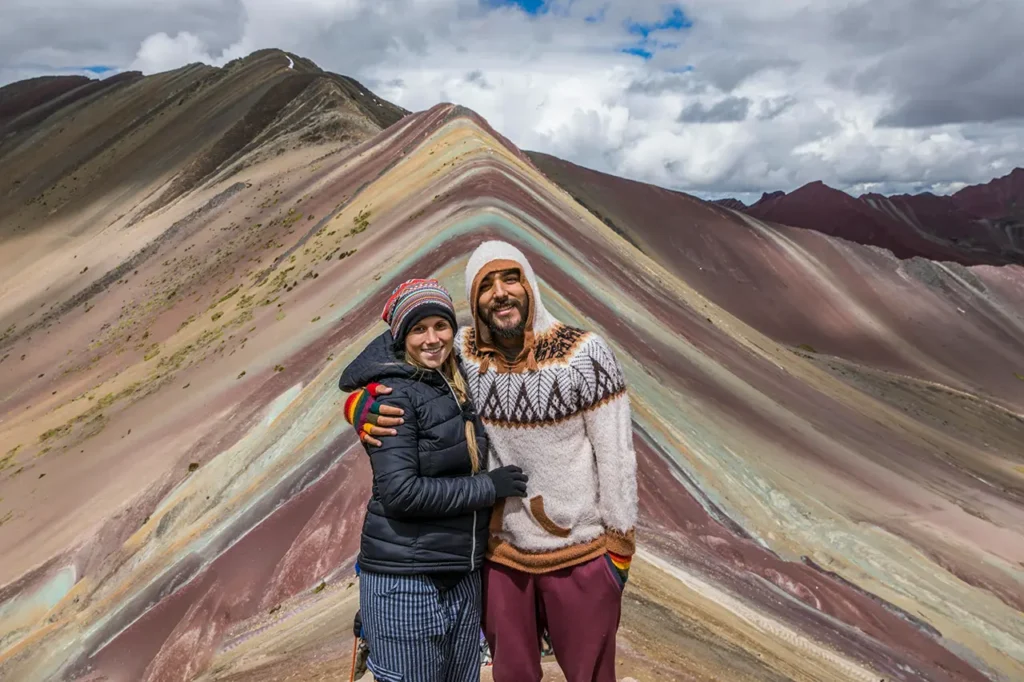
- Warm clothing.
- Hiking boots with good traction.
- Bring plenty of water.
- Eat light meals before the hike.
- Avoid heavy meals that may cause discomfort.
- Sunscreen.
- Hat or cap.
When is the best time to visit Vinicunca?
The best time to visit the Mountain of Colors is during the dry season, between April and November, when rain is less frequent and you can best appreciate the mountain’s colors. In addition, the trails are usually in better condition for hiking.
My Opinion
I believe the Mountain of Seven Colors is one of the most impressive natural wonders in Cusco and Peru. Visiting Vinicunca not only allows you to admire a landscape that’s unique in the world, but also to connect with nature and appreciate the cultural richness of the Andes. The hike can be challenging due to the altitude, but every bit of effort is worth it when you see the mountain’s beautiful colors. In my opinion, it’s an experience everyone should have at least once, as it allows us to break away from our daily routine, enjoy the fresh air, and understand why this place is considered a sacred apu by many Andean communities.